

Raydar
<!--
Work info
-->
Stakeholder:
University of Amsterdam
Role:
Fullstack Developer
Year:
2025
⚠️ PROBLEM
Residents living in dense urban environments such as Amsterdam experience various challenges related to mental health, such as high stress levels, social isolation, and restricted access to natural sunlight as a result of weather patterns or urban features such as high buildings and narrow streets. Exposure to sunlight has been shown to enhance mental health by regulating circadian rhythms, improving mood, and decreasing symptoms of depression. However, access to areas with exposed sunlight can be limited due to a lack of awareness regarding the nature of sunshine patterns and when/where sunlight is available.
⏳ EXISTING SOLUTIONS
Sun exposure mapping and outdoor space recommendations are features offered by a number of current applications. For example, the Shadowmap app lets users assess the amount of sunshine at any time and place by providing real-time 3D sun and shadow visualisations based on geographical data. In a similar vein, applications such as SunCalc assist users in determining their daily exposure to sunlight by providing sun trajectory calculations. Google's Project Sunroof uses high-resolution building and sun path data to predict sunshine availability, even though its primary purpose is solar energy assessment.
✅ OUR SOLUTION
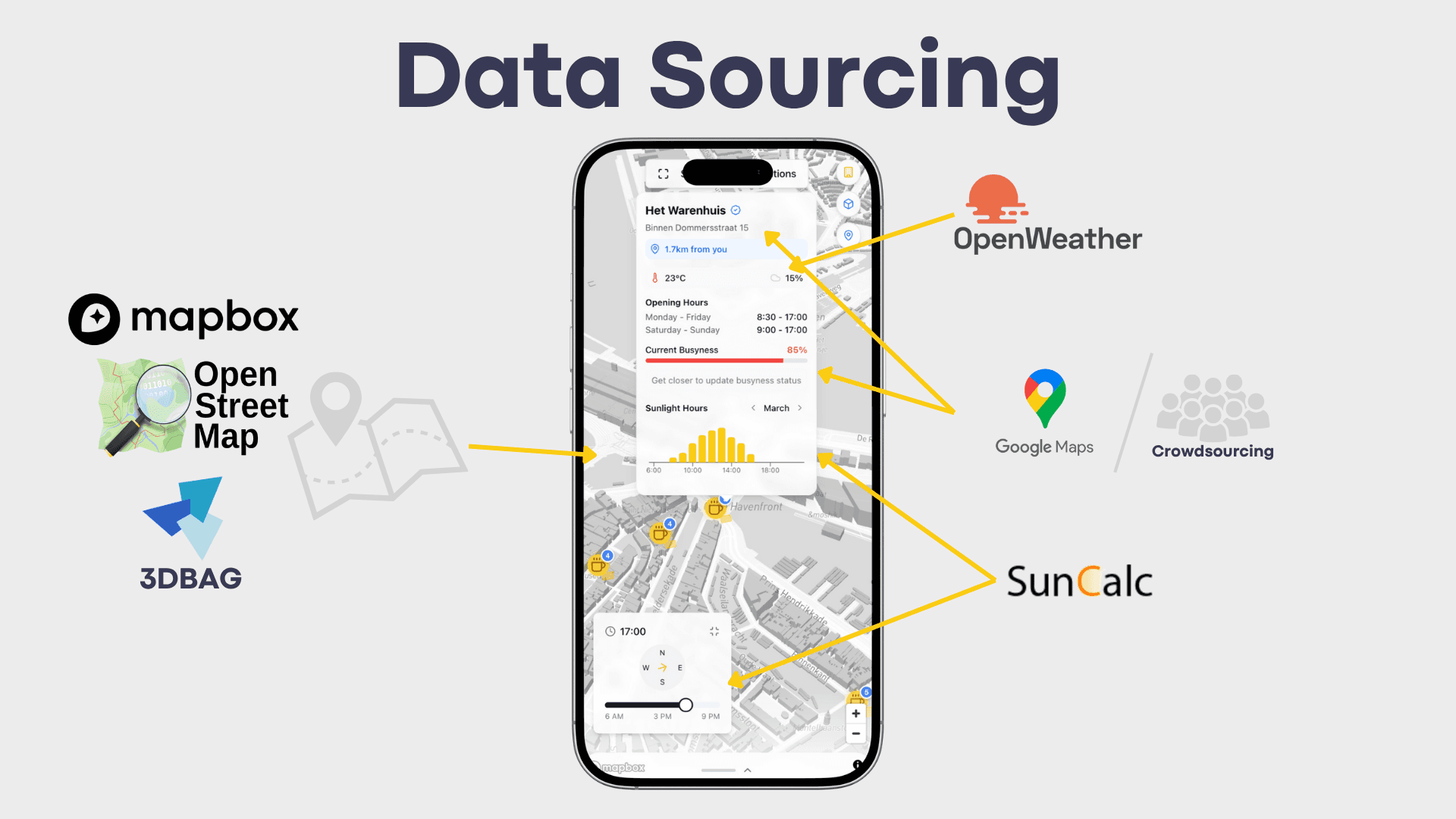
To address this issue, we propose the development of a sunlight accessibility application that uses real-time data on sun trajectory, building heights, and crowd density in the city of Amsterdam. The web application will use an API for a shade analysis to identify whether a location (e.g., a café terrace, tennis court, or park bench) is in the sun or shade at any given time. It will also provide information on crowd levels using Google Maps' Crowd API, enabling users to find sunny, less crowded spots to enjoy outdoor activities. This tool aims to promote mental well-being by making it easier for individuals to access sunlight and engage in outdoor activities.
🎥 Demo Video
See more insights